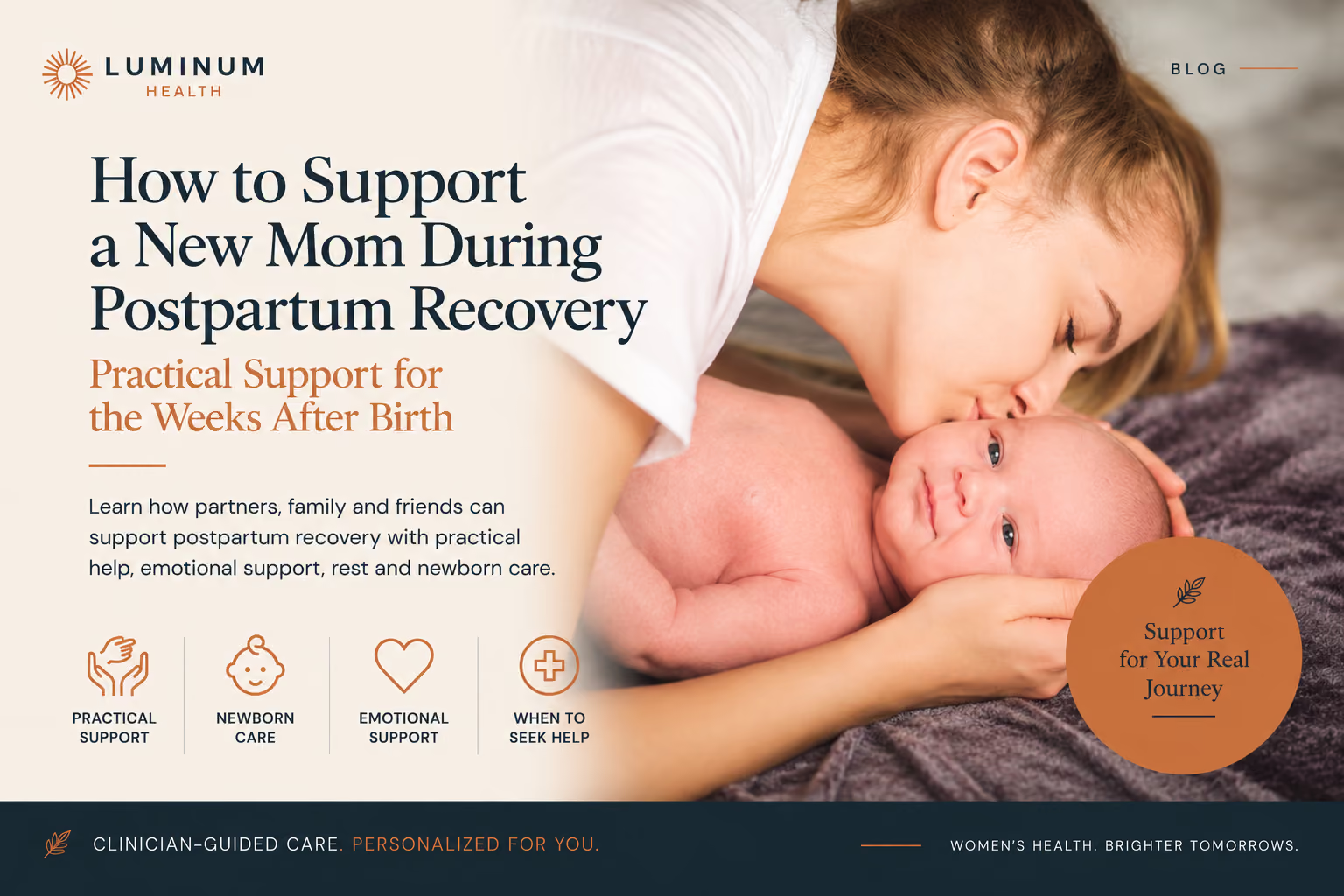
Postpartum Care
October 22, 2026
8 min read
What Practical Postpartum Support Really Looks Like
Learn what practical postpartum support looks like, from meals and rest to feeding help, appointments, emotional support, and knowing when to seek care.






Someone offers to hold the baby. A mother uses that time to wash bottles, start the laundry, and find something to eat.
She appreciates the visit. She is still working.
This is where good intentions can be missed by practical needs. Sometimes she wants another pair of hands with her baby. Sometimes she wants to hold her baby while someone else makes lunch.
Useful postpartum support starts with understanding what would make today feel a little lighter.
For partners, family, and friends wondering how to help a new mom, that often means completing a task, creating room for rest, listening carefully, or helping her reach professional care.
It also means leaving her with fewer things to organize.
“Tell me what you need” can be difficult to answer when several things need attention at once.
Offer one or two realistic options:
A clear offer tells her what is available without requiring her to design the whole arrangement.
Ask before arriving, making purchases, or taking over a task. If she declines, respect that answer. She may want privacy, have different priorities, or simply need a quieter day.
Bringing food can help, especially when it is easy to store, serve, and reheat.
Check dietary preferences and allergies first. Include instructions if needed and use containers she does not have to return.
If you live together, take responsibility for a meal from beginning to end to decide what to make within agreed preferences, check supplies, prepare it, and clean up.
Other useful options include:
Keep comments about her weight or how quickly her body should change out of the conversation. The task is to help her eat comfortably and regularly.
“Try to get some sleep” leaves unanswered questions. Who is caring for the baby? Who will respond to the doorbell? What happens to the jobs she was about to do?
Ask whether she would like time to rest, then agree on the responsibilities you will handle.
A partner or trusted caregiver might manage diaper changes and settling around feeds. A visitor might take care of household tasks, so a quiet moment does not immediately become cleaning time.
Follow the baby's feeding plan and the family's agreed care arrangements. Avoid suggesting that a young baby skip needed feeds to create a longer break.
Anyone helping with infant care should follow safe-sleep guidance: place babies on their backs in their own firm, flat, level sleep space, with a fitted sheet and no loose bedding or soft objects. Avoid falling asleep while holding a baby on a couch or armchair.
Rest may mean showering without rushing, drinking a cup of coffee while it's still warm, sitting quietly for ten minutes, or stepping outside for a few moments of fresh air.
Practical help includes noticing what needs doing and following through on an agreed responsibility.
For laundry, that means washing, drying, folding, and putting clothes away. For groceries, it includes checking what is needed and restocking. For an older child's activity, it may include arranging transport and remembering the equipment.
Partners can agree on recurring responsibilities, so the mother does not have to keep assigning them.
A useful question is:
“Which part of the day could I take responsibility for without you having to remind me?”
Clarify preferences at the start. Taking responsibility should make the household easier to manage while respecting how the family wants things done.
For more ideas about sharing responsibilities, read how partners, family and friends can support postpartum recovery.
Breastfeeding, pumping, formula feeding, and combination feeding can each involve practical tasks.
Ask which ones she would like to help with. That could mean preparing her feeding space, bringing a meal, managing cleanup according to the relevant instructions, or keeping an older child occupied.
Follow the family's feeding plan and professional guidance. Avoid turning every feed into a discussion about what worked for someone else.
If she wants help with pain, feeding concerns, or uncertainty, offer to assist with contacting an appropriate clinician or lactation professional. Newborn health concerns should be discussed with the baby's healthcare team.
The mother should have room to explain what she is experiencing without defending her choices.
An appointment can involve more than the time spent with a clinician.
There may be forms, costs to clarify, transport to arrange, childcare to find, and questions to remember.
With her permission, offer help with a specific step:
Keep her involved in decisions and ask before sharing personal or medical information.
The CDC's Hear Her campaign encourages loved ones to listen to concerns, help women access care, and support follow-up. If she says something feels wrong, take that seriously even if the cause is not obvious.
For more information about follow-up appointments and ongoing care, see Why Recovery Deserves More Than One Appointment.
Sometimes she needs to say, “Today was difficult,” without reassuring everyone that she is grateful or loves her baby.
Try:
Give her space to answer. Avoid comparing her recovery with someone else's, commenting on how well she appears to be coping, or immediately suggesting that she should feel differently.
Emotional support also includes recognizing when professional help may be needed. The National Institute of Mental Health notes that postpartum depression can involve persistent sadness or anxiety, irritability, loss of interest, and difficulty concentrating. Severe mood symptoms or symptoms lasting longer than two weeks warrant professional attention. Seek help sooner when functioning or safety is affected. Postpartum depression is treatable.
A helpful response is: “I'm glad you told me. Would you like help contacting your healthcare professional?”
You do not need to do anything. Choose something useful that you can reliably follow through.
Some postpartum concerns require immediate medical attention. The CDC advises watching for urgent maternal warning signs during pregnancy and throughout the year after delivery.
Examples include chest pain, difficulty breathing, fainting, a severe or worsening headache, vision changes, fever of 100.4°F (38°C) or higher, severe abdominal pain, heavy bleeding that soaks a pad in an hour, or thoughts of harming herself or her baby. Seek medical care immediately and tell the care team about the recent pregnancy. The CDC provides the full warning sign list.
Call 911 for a medical emergency or immediate danger. In the United States, call or text 988 for suicidal thoughts or a mental-health crisis. Do not wait for a routine appointment or message response when emergency care is needed.
The first few weeks often bring texts, meals, flowers, and visitors.
Then life becomes busier again.
For many mothers, that's when support starts to fade even though recovery is still ongoing.
A check-in three months later can matter just as much as a meal during the first week.
A practical offer can be small and repeatable: a weekly grocery pickup, school transport, or an agreed time to check in.
If you live far away, ask whether help researching a requested service, arranging a delivery, or having a regular phone conversation would be welcome.
Needs can change as relatives leave, work resumes, or new questions appear. Check whether your offer still fits.
You do not have to wait for a mother to look overwhelmed before offering help. Equally, she should be free to decline it.
The question to keep asking is: “What can I help make easier today?”
Postpartum recovery doesn't necessarily end after six weeks. Learn more about why recovery continues beyond the early postpartum period.
Family and friends can provide valuable practical care. Some questions also benefit from a qualified healthcare professional.
Luminum Restore offers clinician-led postpartum guidance, education, and care coordination through a Registered Nurse, Family Nurse Practitioner, and Care Coordinator. Support may include recovery questions, newborn care, feeding, and emotional well-being for eligible clients in supported states.
If you are looking for additional guidance during recovery, learn how Luminum Restore can fit alongside your existing care.
You can also read about how different postpartum care professionals work together.
This article provides general education and does not replace individualized medical advice, diagnosis, or treatment. Luminum provides non-emergency support and does not replace necessary obstetric, pediatric, primary, specialty, mental health, or emergency care.